
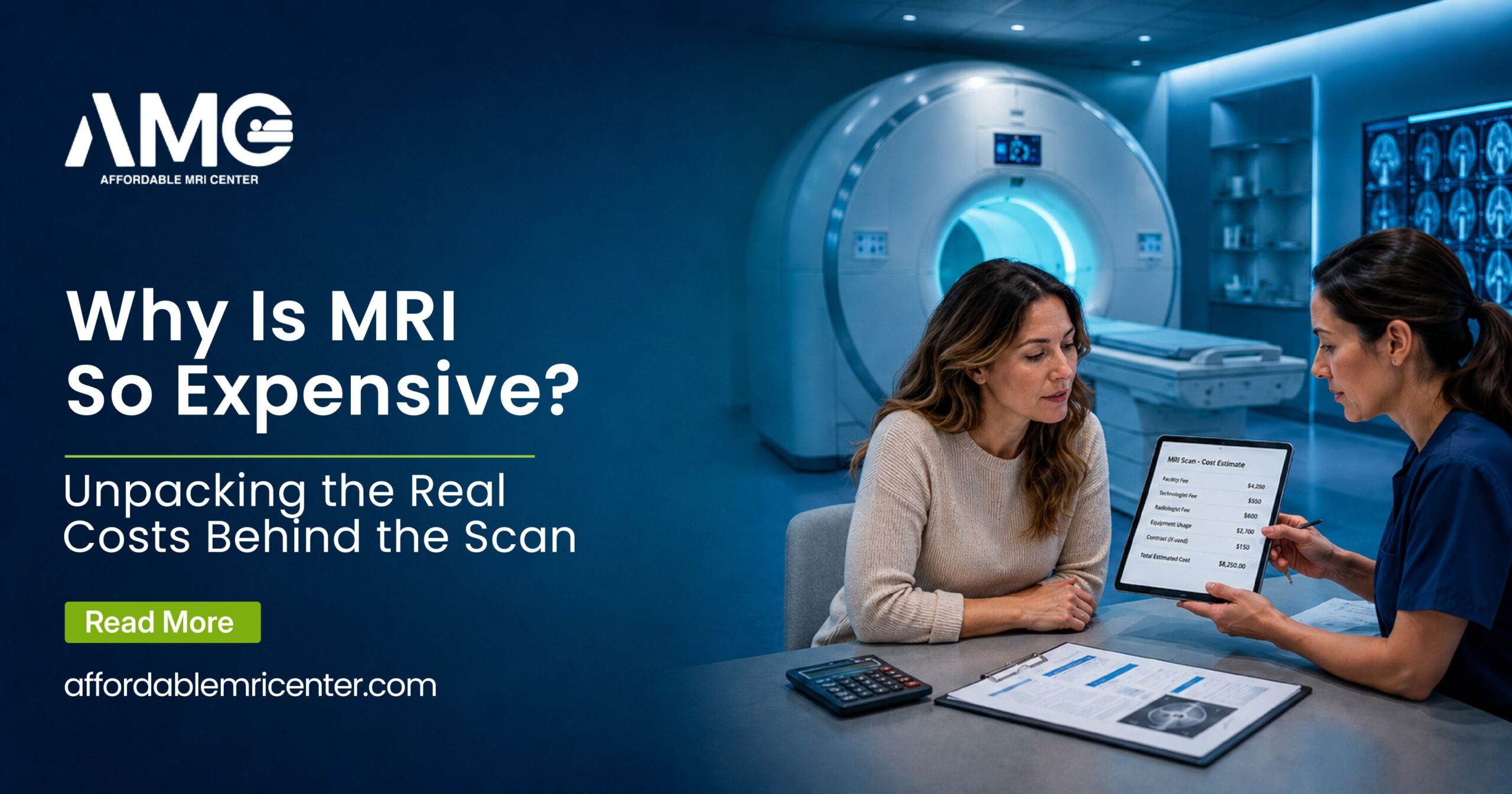
Why Is MRI So Expensive? Unpacking the Real Costs Behind the Scan

Why Is MRI So Expensive

Share This Post

Disclaimer : This guide is for informational purposes only and does not constitute professional medical, legal, or financial advice. It is not a substitute for professional clinical diagnosis or treatment. Always consult a qualified healthcare provider regarding your health, and verify all billing terms directly with the imaging facility. In a medical emergency, visit the nearest emergency room immediately. 

Table of Contents

Opening an itemized medical bill after a diagnostic procedure can be a genuinely stressful experience. For many patients, looking at a quote for Magnetic Resonance Imaging triggers immediate sticker shock. The numbers seem arbitrarily high, especially when compared to a routine X-ray or a standard ultrasound. You might find yourself sitting at your kitchen table, staring at an estimate, and asking: why is MRI so expensive?”

The short answer is that an MRI is not just a simple camera taking a picture of your bones. It is one of the most technologically demanding and resource-heavy medical tools ever created. To make sense of the charges, it helps to pull back the curtain on how these machines actually work, what it takes to run them daily, and how healthcare billing operates behind the scenes.

The Primary Drivers: Why Is MRI So Expensive?

To fully grasp why are MRI scans expensive, you have to look at the extreme physics happening inside the machine. Unlike conventional imaging tools that send a quick burst of radiation through tissue, an MRI scanner generates a massive, continuous magnetic field. This field is often 10,000 to 30,000 times stronger than the gravitational pull of the Earth.

This level of sheer technological intensity explains why is diagnostic imaging expensive across the board, but magnetic imaging sits in a category completely of its own. Inside the cylindrical scanner, super-conducting coils send specific radiofrequency signals into the body. These signals temporarily knock the hydrogen atoms in your cells out of alignment. As those atoms snap back into their natural place, they emit faint signals. Advanced computer arrays collect these signals and convert them into millimeter-thin, high-contrast slices of soft tissue, nerves, ligaments, and organs.

Manufacturing a machine capable of doing this safely demands raw materials of unbelievable purity, custom software, and incredibly tight engineering tolerances. A standard clinical scanner costs upwards of $1.5 million to $3 million before it even arrives at a clinic’s loading dock.

Beyond the Scanner: Why Is MRI So Expensive to Maintain?

Buying the hardware is only step one. The ongoing, daily upkeep is what truly drives up operational overhead, answering a huge piece of what makes MRI scans cost so much.

Most clinical scanners use liquid helium to keep the internal electromagnetic coils cooled down to nearly minus 452 degrees Fahrenheit—which is absolute zero. Without this extreme cryogenic cooling, the system cannot safely maintain its magnetic field. Liquid helium is a rare, volatile resource subject to massive international supply bottlenecks, making it a massive, constant line-item expense for imaging facilities.

On top of power and cooling, these complex systems require rigorous, ongoing service contracts. Highly trained biomedical engineers must regularly test and recalibrate the magnetic field. If the field shifts by even a microscopic fraction, image clarity degrades immediately. A blurry image could potentially mask a subtle ligament tear or a tiny neurological lesion, making expert maintenance non-negotiable.

Core Factors Affecting MRI Cost

When figuring out exactly why is MRI so expensive for the average consumer, you have to factor in every single one of these operational elements. Facilities must build these background costs into their patient pricing models just to keep the doors open:

  • Custom Room Construction: An MRI scanner cannot sit in an ordinary hospital room. It requires a dedicated suite enclosed in a custom copper shield—known as a Faraday cage—to block external radio signals from corrupting the scan. The floors must also be reinforced with heavy steel to support several tons of dead weight.
  • Specialized Medical Staff: A scan requires a certified radiologic technologist to manage patient safety, position the body correctly, and run the complex scan sequences safely.
  • Massive Power Consumption: Keeping a multi-Tesla magnetic field stable isn’t just about helium; it also demands a staggering amount of electricity. The monthly power bills for a single imaging clinic often look more like the utility costs of a mid-sized factory.
  • Contrast Material: When doctors need to evaluate blood flow, tumor boundaries, or active inflammation, they administer a gadolinium-based contrast dye. This pharmaceutical drug, along with the IV delivery supplies, adds a separate direct cost to the final bill.

Table 1: Key Equipment & Operational Overhead Drivers

Budget CategoryWhat It InvolvesFinancial Impact
Capital EquipmentPurchase of 1.5T or 3.0T magnetic scanner$1,200,000 – $3,000,000+ upfront
Facility Build-OutCopper Faraday cage shielding and floor reinforcement$150,000 – $450,000 upfront
Cryogenic CoolingLiquid helium refilling and closed-loop chillers$3,000 – $8,000 monthly
Clinical PersonnelCombined technologist time and radiologist interpretationMajor recurring labor overhead

When facilities calculate their operational budgets, these capital investments are spread out across their patient volume over several years. That amortization directly dictates the base price of every single slot on the schedule.

Hospital vs. Outpatient Center: MRI Pricing Explained

Where a scan takes place has a massive impact on the final charge. Getting MRI pricing explained clearly requires looking at the structural differences between major hospital systems and independent outpatient facilities.

If you ask a medical administrator how much does an MRI cost, their answer will depend entirely on the care setting. Hospitals carry massive overhead. They operate round-the-clock emergency departments, intensive care units, trauma teams, and surgical suites. To keep those essential, life-saving services running, hospitals attach substantial “facility fees” to routine outpatient diagnostic procedures.

Independent imaging centers, on the other hand, do not have emergency rooms to subsidize. They focus exclusively on scheduled outpatient imaging. Because their building maintenance, administrative staff, and utility requirements are vastly streamlined, their prices are typically a fraction of what a hospital charges for the exact same scan using identical technology. You get the exact same level of image clarity and the same expert radiologist reviewing your scans, but you completely avoid the massive facility markups.

Real-World Price Variations

Another practical layer to why is MRI so expensive involves the sheer geographic differences in regional healthcare markets. Looking at broader market data, the average MRI scan cost swings wildly depending on the zip code, the facility type, and whether a physician orders contrast dye.

A patient paying out-of-pocket might see a $1,200 bill at a private imaging center in the suburbs, while a massive hospital downtown bills $5,000 or more for the exact same body region.

Table 2: Estimated Cash & Uninsured Cost Ranges by Facility Type

Scan RegionIndependent Center (Estimated)Hospital Outpatient (Estimated)
Brain / Cranial$450 – $850$1,800 – $6,500+
Lumbar / Cervical Spine$500 – $900$2,100 – $7,200+
Joint (Knee, Shoulder, Hip)$400 – $800$1,600 – $5,800+
Abdomen / Pelvis$550 – $1,100$2,200 – $8,000+

(Note: These ranges represent broad market estimates. An individual’s actual MRI cost without insurance depends heavily on regional healthcare pricing, local competition, and specific physician ordering requirements.)

Practical Ways to Reduce MRI Scan Costs

If you are facing a high deductible or lack medical coverage entirely, you do not have to accept the first price tag you are given. There are several clear ways to reduce MRI scan costs without sacrificing an ounce of clinical quality:

  1. Opt for Freestanding Outpatient Centers: Ask your ordering physician to send your referral to an independent imaging clinic rather than a hospital-affiliated radiology department.
  2. Ask About Cash-Pay Discounts: Navigating insurance claims requires an army of billing staff and months of waiting for clinics to get paid. If you offer to pay upfront on the day of your appointment, many independent centers will happily knock a significant percentage off the total price because you’re saving them so much administrative headache.
  3. Get the Exact Billing Codes Upfront: When you call to schedule, ask the receptionist for the specific CPT (Current Procedural Terminology) code for your exam. Use that code to request a fully bundled price quote. Make sure they include both the “technical fee” (the cost of the machine time) and the “professional fee”—which covers the board-certified radiologist who sits in a dark room afterward, painstakingly analyzing hundreds of image slices to write your official diagnostic report. Getting this in writing prevents surprise bills from showing up in your mailbox a month later.
  4. Shop Local Networks: Take the time to shop around for affordable MRI options in your local area. It might feel strange to price-compare medical care, but making a few phone calls before you book can easily keep hundreds—sometimes thousands—of dollars in your pocket.

Navigating Your Healthcare Bills with Confidence

Once you actually see behind the curtain of medical billing, the whole system feels a lot less intimidating. Knowing where these massive costs come from gives you the power to ask the right questions and protect your wallet. Between multimillion-dollar hardware, complex liquid helium cooling systems, specialized room shielding, and expert clinical interpretations, there are perfectly valid structural reasons why is MRI so expensive at a foundational level. However, high prices do not mean patients are left without choices. By prioritizing transparent outpatient facilities and asking about cash-pay options ahead of time, individuals can get the clear diagnostic answers their doctors need without incurring unnecessary financial strain. When looking for transparent pricing and top-tier imaging, exploring local facilities like Affordable MRI Center is a smart first step toward keeping your healthcare costs strictly under control.

Frequently Asked Questions

Hospitals carry the financial burden of keeping an entire infrastructure running 24/7. Your scan is quietly subsidizing the emergency room, the trauma unit, and overnight inpatient care through a massive “facility fee.” Private outpatient centers just do scheduled imaging, meaning their operating costs are a fraction of a hospital’s, and their billing reflects that reality.

Usually, yes. A 3.0 Tesla scanner packs double the magnetic punch of a standard 1.5T model, giving doctors incredibly crisp images that are perfect for tricky neurological issues or tiny joint tears. But because that hardware is wildly expensive to buy and maintain, clinics almost always pass those premium equipment costs onto the patient.

If you are entirely out-of-pocket, never settle for the initial sticker price. Look for independent clinics that advertise flat-rate cash packages. Just keep in mind that if your doctor orders the scan “with contrast,” the price will jump. Using contrast dye means the clinic has to supply specialized pharmaceuticals, IV equipment, and a nurse to administer the injection. Plus, the radiologist has to spend extra time comparing the pre-dye and post-dye images, driving up the final invoice.

In many cases, an open scanner will run a bit cheaper. This is mostly because these open units frequently rely on permanent magnetic setups that do not require constant, expensive liquid helium cooling. However, there is a distinct clinical trade-off. Open machines typically generate a much weaker magnetic field, which yields softer, less detailed pictures. Because of this, specialists often insist on traditional closed systems when trying to diagnose complex or tiny structural issues. For complex diagnostics, doctors usually require a high-field closed MRI to get the necessary detail. 

Affordable MRI SEO Appointments (#5)

Disclaimer : This guide is for informational purposes only and does not constitute professional medical, legal, or financial advice. It is not a substitute for professional clinical diagnosis or treatment. Always consult a qualified healthcare provider regarding your health, and verify all billing terms directly with the imaging facility. In a medical emergency, visit the nearest emergency room immediately. 

Table of Contents

Opening an itemized medical bill after a diagnostic procedure can be a genuinely stressful experience. For many patients, looking at a quote for Magnetic Resonance Imaging triggers immediate sticker shock. The numbers seem arbitrarily high, especially when compared to a routine X-ray or a standard ultrasound. You might find yourself sitting at your kitchen table, staring at an estimate, and asking: why is MRI so expensive?”

The short answer is that an MRI is not just a simple camera taking a picture of your bones. It is one of the most technologically demanding and resource-heavy medical tools ever created. To make sense of the charges, it helps to pull back the curtain on how these machines actually work, what it takes to run them daily, and how healthcare billing operates behind the scenes.

The Primary Drivers: Why Is MRI So Expensive?

To fully grasp why are MRI scans expensive, you have to look at the extreme physics happening inside the machine. Unlike conventional imaging tools that send a quick burst of radiation through tissue, an MRI scanner generates a massive, continuous magnetic field. This field is often 10,000 to 30,000 times stronger than the gravitational pull of the Earth.

This level of sheer technological intensity explains why is diagnostic imaging expensive across the board, but magnetic imaging sits in a category completely of its own. Inside the cylindrical scanner, super-conducting coils send specific radiofrequency signals into the body. These signals temporarily knock the hydrogen atoms in your cells out of alignment. As those atoms snap back into their natural place, they emit faint signals. Advanced computer arrays collect these signals and convert them into millimeter-thin, high-contrast slices of soft tissue, nerves, ligaments, and organs.

Manufacturing a machine capable of doing this safely demands raw materials of unbelievable purity, custom software, and incredibly tight engineering tolerances. A standard clinical scanner costs upwards of $1.5 million to $3 million before it even arrives at a clinic’s loading dock.

Beyond the Scanner: Why Is MRI So Expensive to Maintain?

Buying the hardware is only step one. The ongoing, daily upkeep is what truly drives up operational overhead, answering a huge piece of what makes MRI scans cost so much.

Most clinical scanners use liquid helium to keep the internal electromagnetic coils cooled down to nearly minus 452 degrees Fahrenheit—which is absolute zero. Without this extreme cryogenic cooling, the system cannot safely maintain its magnetic field. Liquid helium is a rare, volatile resource subject to massive international supply bottlenecks, making it a massive, constant line-item expense for imaging facilities.

On top of power and cooling, these complex systems require rigorous, ongoing service contracts. Highly trained biomedical engineers must regularly test and recalibrate the magnetic field. If the field shifts by even a microscopic fraction, image clarity degrades immediately. A blurry image could potentially mask a subtle ligament tear or a tiny neurological lesion, making expert maintenance non-negotiable.

Core Factors Affecting MRI Cost

When figuring out exactly why is MRI so expensive for the average consumer, you have to factor in every single one of these operational elements. Facilities must build these background costs into their patient pricing models just to keep the doors open:

  • Custom Room Construction: An MRI scanner cannot sit in an ordinary hospital room. It requires a dedicated suite enclosed in a custom copper shield—known as a Faraday cage—to block external radio signals from corrupting the scan. The floors must also be reinforced with heavy steel to support several tons of dead weight.
  • Specialized Medical Staff: A scan requires a certified radiologic technologist to manage patient safety, position the body correctly, and run the complex scan sequences safely.
  • Massive Power Consumption: Keeping a multi-Tesla magnetic field stable isn’t just about helium; it also demands a staggering amount of electricity. The monthly power bills for a single imaging clinic often look more like the utility costs of a mid-sized factory.
  • Contrast Material: When doctors need to evaluate blood flow, tumor boundaries, or active inflammation, they administer a gadolinium-based contrast dye. This pharmaceutical drug, along with the IV delivery supplies, adds a separate direct cost to the final bill.

Table 1: Key Equipment & Operational Overhead Drivers

Budget CategoryWhat It InvolvesFinancial Impact
Capital EquipmentPurchase of 1.5T or 3.0T magnetic scanner$1,200,000 – $3,000,000+ upfront
Facility Build-OutCopper Faraday cage shielding and floor reinforcement$150,000 – $450,000 upfront
Cryogenic CoolingLiquid helium refilling and closed-loop chillers$3,000 – $8,000 monthly
Clinical PersonnelCombined technologist time and radiologist interpretationMajor recurring labor overhead

When facilities calculate their operational budgets, these capital investments are spread out across their patient volume over several years. That amortization directly dictates the base price of every single slot on the schedule.

Hospital vs. Outpatient Center: MRI Pricing Explained

Where a scan takes place has a massive impact on the final charge. Getting MRI pricing explained clearly requires looking at the structural differences between major hospital systems and independent outpatient facilities.

If you ask a medical administrator how much does an MRI cost, their answer will depend entirely on the care setting. Hospitals carry massive overhead. They operate round-the-clock emergency departments, intensive care units, trauma teams, and surgical suites. To keep those essential, life-saving services running, hospitals attach substantial “facility fees” to routine outpatient diagnostic procedures.

Independent imaging centers, on the other hand, do not have emergency rooms to subsidize. They focus exclusively on scheduled outpatient imaging. Because their building maintenance, administrative staff, and utility requirements are vastly streamlined, their prices are typically a fraction of what a hospital charges for the exact same scan using identical technology. You get the exact same level of image clarity and the same expert radiologist reviewing your scans, but you completely avoid the massive facility markups.

Real-World Price Variations

Another practical layer to why is MRI so expensive involves the sheer geographic differences in regional healthcare markets. Looking at broader market data, the average MRI scan cost swings wildly depending on the zip code, the facility type, and whether a physician orders contrast dye.

A patient paying out-of-pocket might see a $1,200 bill at a private imaging center in the suburbs, while a massive hospital downtown bills $5,000 or more for the exact same body region.

Table 2: Estimated Cash & Uninsured Cost Ranges by Facility Type

Scan RegionIndependent Center (Estimated)Hospital Outpatient (Estimated)
Brain / Cranial$450 – $850$1,800 – $6,500+
Lumbar / Cervical Spine$500 – $900$2,100 – $7,200+
Joint (Knee, Shoulder, Hip)$400 – $800$1,600 – $5,800+
Abdomen / Pelvis$550 – $1,100$2,200 – $8,000+

(Note: These ranges represent broad market estimates. An individual’s actual MRI cost without insurance depends heavily on regional healthcare pricing, local competition, and specific physician ordering requirements.)

Practical Ways to Reduce MRI Scan Costs

If you are facing a high deductible or lack medical coverage entirely, you do not have to accept the first price tag you are given. There are several clear ways to reduce MRI scan costs without sacrificing an ounce of clinical quality:

  1. Opt for Freestanding Outpatient Centers: Ask your ordering physician to send your referral to an independent imaging clinic rather than a hospital-affiliated radiology department.
  2. Ask About Cash-Pay Discounts: Navigating insurance claims requires an army of billing staff and months of waiting for clinics to get paid. If you offer to pay upfront on the day of your appointment, many independent centers will happily knock a significant percentage off the total price because you’re saving them so much administrative headache.
  3. Get the Exact Billing Codes Upfront: When you call to schedule, ask the receptionist for the specific CPT (Current Procedural Terminology) code for your exam. Use that code to request a fully bundled price quote. Make sure they include both the “technical fee” (the cost of the machine time) and the “professional fee”—which covers the board-certified radiologist who sits in a dark room afterward, painstakingly analyzing hundreds of image slices to write your official diagnostic report. Getting this in writing prevents surprise bills from showing up in your mailbox a month later.
  4. Shop Local Networks: Take the time to shop around for affordable MRI options in your local area. It might feel strange to price-compare medical care, but making a few phone calls before you book can easily keep hundreds—sometimes thousands—of dollars in your pocket.

Navigating Your Healthcare Bills with Confidence

Once you actually see behind the curtain of medical billing, the whole system feels a lot less intimidating. Knowing where these massive costs come from gives you the power to ask the right questions and protect your wallet. Between multimillion-dollar hardware, complex liquid helium cooling systems, specialized room shielding, and expert clinical interpretations, there are perfectly valid structural reasons why is MRI so expensive at a foundational level. However, high prices do not mean patients are left without choices. By prioritizing transparent outpatient facilities and asking about cash-pay options ahead of time, individuals can get the clear diagnostic answers their doctors need without incurring unnecessary financial strain. When looking for transparent pricing and top-tier imaging, exploring local facilities like Affordable MRI Center is a smart first step toward keeping your healthcare costs strictly under control.

Frequently Asked Questions

Hospitals carry the financial burden of keeping an entire infrastructure running 24/7. Your scan is quietly subsidizing the emergency room, the trauma unit, and overnight inpatient care through a massive “facility fee.” Private outpatient centers just do scheduled imaging, meaning their operating costs are a fraction of a hospital’s, and their billing reflects that reality.

Usually, yes. A 3.0 Tesla scanner packs double the magnetic punch of a standard 1.5T model, giving doctors incredibly crisp images that are perfect for tricky neurological issues or tiny joint tears. But because that hardware is wildly expensive to buy and maintain, clinics almost always pass those premium equipment costs onto the patient.

If you are entirely out-of-pocket, never settle for the initial sticker price. Look for independent clinics that advertise flat-rate cash packages. Just keep in mind that if your doctor orders the scan “with contrast,” the price will jump. Using contrast dye means the clinic has to supply specialized pharmaceuticals, IV equipment, and a nurse to administer the injection. Plus, the radiologist has to spend extra time comparing the pre-dye and post-dye images, driving up the final invoice.

In many cases, an open scanner will run a bit cheaper. This is mostly because these open units frequently rely on permanent magnetic setups that do not require constant, expensive liquid helium cooling. However, there is a distinct clinical trade-off. Open machines typically generate a much weaker magnetic field, which yields softer, less detailed pictures. Because of this, specialists often insist on traditional closed systems when trying to diagnose complex or tiny structural issues. For complex diagnostics, doctors usually require a high-field closed MRI to get the necessary detail.