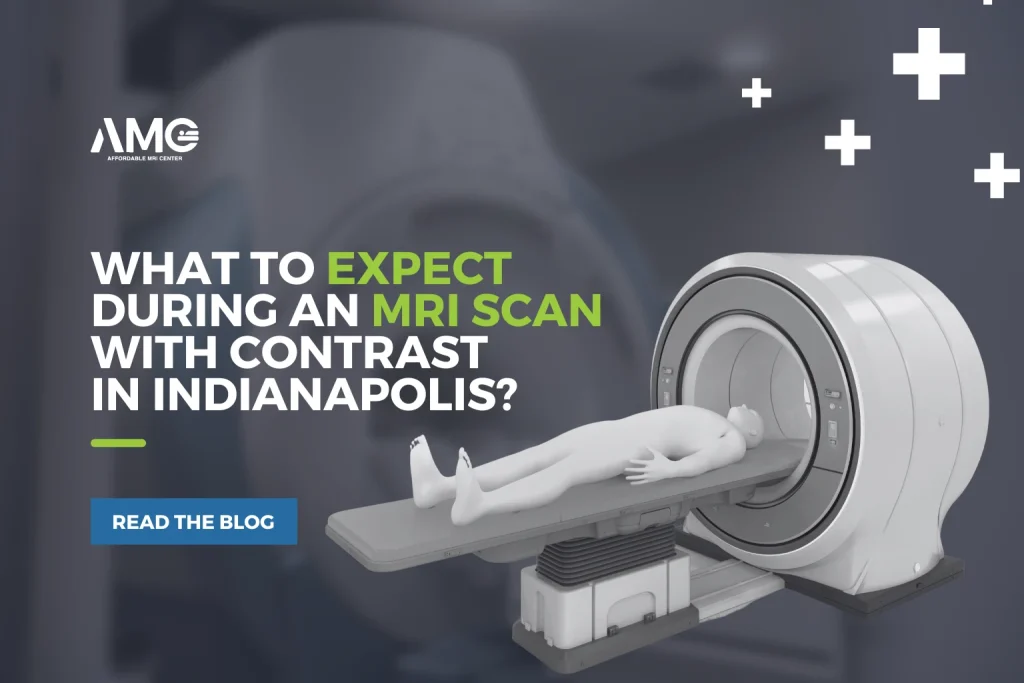
An MRI (magnetic resonance imaging) scan is a non-invasive imaging test that uses a powerful magnetic field and radio waves to produce detailed pictures of the organs and tissues within your body. An MRI scan with contrast is an MRI scan that includes the injection of a contrast agent to help make certain structures in the body more visible. If you live in Indianapolis and your doctor has ordered a contrast MRI, you may wonder when it’s needed and what to expect. There are many different providers of MRI scans with contrast in Indianapolis, so, through this blog, we will show you what it is like during the process.
When Do You Need an MRI Scan With Contrast?
An MRI scan with contrast is generally prescribed when the normal MRI scan is not yielding sufficient information for an accurate diagnosis. The contrast material used, for example, a chemical called gadolinium, enhances the visibility of specific structures in the body, including blood vessels, tumors, or inflamed areas. This allows doctors to easily identify any abnormalities and make a more precise diagnosis.
An imaging center with contrast in Indianapolis is needed too for diagnosing diseases that involve the brain, spine, or other internal organs. Some of the most frequent reasons your doctor will order a contrast MRI scan are
- To diagnose tumors, cysts, or other abnormalities of the brain or spinal cord
- To check blood vessels within the brain or neck for obstructions or other pathologies
- To diagnose or to monitor the worsening of multiple sclerosis or other central nervous system-related autoimmune diseases
- To diagnose or to monitor the worsening of infection or inflammatory illnesses, like abscesses or arthritis
- To assess the degree of brain, spine, or other internal organ injury, including accident- and sports-related injuries.
Understanding the MRI with Contrast Procedure
The following is a step-by-step guide on what to expect from your contrast MRI scan in Indianapolis:
Preparation
Before the scan, you will have to fill out a questionnaire on your medical history, drugs, and allergies. You will also be required to remove metallic objects like jewelry, watches, and glasses.
Contrast Injection
A technician or nurse will place an intravenous (IV) line in your hand or arm. The contrast agent will be injected via the IV line. You might feel a metallic taste or a cool feeling in your mouth for a short time when the injection is given.
Positioning
You will be positioned on a table that slides into the MRI machine. The technologist will position you comfortably and properly inside the scanner. You will be given a head coil, knee coil, or another device, depending on what part of your body is being examined, to enhance image quality.
Scanning
Throughout the scan, the MRI machine will be making loud, pounding, and knocking sounds. You will be supplied with earplugs or headphones to minimize the noise. Try to stay as still as possible during the scan, since motion will make the images blurry. The technologist will talk to you during the scan through an intercom system.
Post-Scan
You’ll have your IV line taken out after the scan, and you can then go home. In most cases, you may immediately return to normal activities unless instructed otherwise by your doctor. The radiologist doctor will interpret the report and provide you with a CD of the scan.
Finding the Best MRI Scan with Contrast in Indianapolis
Keep these things in mind when looking for an MRI scan with contrast in Indianapolis:
- Choose an MRI facility that uses advanced equipment. Stronger field strength produces sharper, more detailed pictures. In most situations, 1.5T and 3T MRI scanners offer superior resolution.
- The radiologist’s expertise in interpreting the images is also very important. Make sure the center has board-certified radiologists with different specializations.
- Choose a facility that values patient comfort. This would involve amenities like a large and light scanning room, comfortable padding and blankets, and listening to music during the procedure.
- Technology employed in reconstructing images and software used in analyzing images can influence the final quality and validity of the MRI results.
- Verify whether the imaging center holds accreditation from a reputable organization like the American College of Radiology (ACR). Accreditation verifies the center’s compliance with safety, quality, and equipment performance.
- MRI scans can be expensive, so ask about cost first and verify with your insurance provider to find out what is covered. Some imaging centers offer discounts or payment plans.
- Ask about the turnaround time for receiving your results. Reports can often be expedited in urgent cases.
- Find out if the MRI center offers emergency MRI scans with contrast in Indianapolis. Your chosen provider should be reliable at times when you need it most.
These are a few particular things to keep in mind when evaluating an imaging facility with contrast in Indianapolis:
- Make sure the center follows strict rules in using contrast agents. They need to have suitably qualified staff members who can manage any likely negative effects or allergic responses.
- Pre-screening by the center needs to be done in depth to look for any contraindication of use of contrast, like kidney issues or history of allergy.
- The center must have experience with a broad array of specialized MRI protocols, including those that are custom-designed for specific conditions or areas of the body.
Emergency MRI Scan with Contrast in Indianapolis
There are certain situations where an emergency MRI scan with contrast is required to identify a severe medical condition as soon as possible. Stroke, spinal cord compression, and severe infections are some of the conditions that need an emergency MRI.
If you need an emergency MRI with contrast in Indianapolis, visit the closest hospital emergency room or MRI center that caters to emergency cases. Not all imaging centers have emergency MRI services available, particularly with contrast. Hospitals tend to be the first line of defense in an emergency, or look for imaging centers that offer comprehensive service.
Safety Considerations for MRI with Contrast
Although MRI scans are safe, there are some possible risks and issues, like allergic reactions. Rare allergic reactions to gadolinium-based contrast agents can happen. These reactions may be mild skin rashes or more serious anaphylactic reactions. Nephrogenic Systemic Fibrosis (NSF) is a serious but rare illness that can occur in individuals with severe kidney disease who undergo gadolinium-based contrast agents. Your doctor will evaluate your kidney function before the scan to reduce this risk.
Also, MRI scans are avoided in the first trimester of pregnancy except in extreme necessity. And if you have claustrophobia, discuss alternatives with your doctor; you can have an open MRI machine or a relaxing medication during the procedure.
Conclusion
An MRI with contrast is an effective diagnostic agent for the diagnosis of all sorts of medical conditions. Learning about how to select a qualified center that provides MRI with contrast in Indianapolis ensures you receive accurate and high-quality images. Remember not to compromise safety, comfort, and affordability in selecting a center.
A Trustworthy and Affordable MRI Center
Do you need a cheap MRI scan with contrast in Indianapolis? Affordable MRI Center offers strong imaging equipment and experienced radiologists. They also provide emergency MRI scans, focusing on patient comfort. They are committed to giving you the best quality care at a cost you can afford. Don’t wait. Take charge of your health. Call (317)-284-1978 to get a quote and more information about our services.